Showing posts with label Birds. Show all posts

Wednesday, 25 August 2010

beautiful animals of bird caspian tern photos

The caspian tern is the world's largest tern with a length of 48–56 cm, a wingspan of 127–140 cm and a weight of 574–782g.Adult birds have black legs, and a long thick red-orange bill with a small black tip. They have a white head with a black cap and white neck, belly and tail. The upper wings and back are pale grey, the underwings are pale with dark primary feathers. In flight, the tail is less forked than other terns and wing tips black on the underside.In winter, the black cap is still present (unlike many other terns), but with some white streaking on the forehead. The call is a loud heron-like croak.They feed mainly on fish, which they dive for, hovering high over the water and then plunging. They also occasionally eat large insects, the young and eggs of other birds and rodents. They may fly up to 60 km from the breeding colony to catch fish, it often fishes on freshwater lakes as well as at sea.


beautiful birds of caspian tern sound  photos

beautiful birds of caspian tern sound photos


please click on a thumbnail to view a picture in this large window

please click on a thumbnail to view a picture in this large window

free downloading of caspian tern Columbia river
free downloading of Caspian tern Columbia river


latest images of Caspian tern bird wiki

latest images of Caspian tern bird wiki


nature flying birds of caspian facts

nature flying birds of caspian facts

Breeding is in spring and summer, with one to three pale blue green eggs, with heavy brown spotting, being laid. They nest either together in colonies, or singly in mixed colonies of other tern and gull species. The nest is on the ground among gravel and sand, or sometimes on vegetation; incubation lasts for 26–28 days. The chicks are variable in plumage pattern, from pale creamy to darker grey-brown, this variation assists adults in recognizing their own chicks when returning to the colony from feeding trips. Fledging occurs after 35–45 days.for more pics...

Saturday, 21 August 2010

african animals of black guillemot birds poster


african animals of black guillemot birds poster

african animals of black guillemot birds poster


please click on a thumbnail to view a picture in this large window


please click on a thumbnail to view a picture in this large window


black guillemot resting on a cliff

free downloading pics of black guillemot wiki

nature animals of black guillemot flying pictures


different types of birds youtube


different types of birds youtube


The Black Guillemot or Tystie is a medium-sized alcid.Adult birds have black bodies with a white wing patch, a thin dark bill, and red legs and feet. They show white wing linings in flight.In winter, the upperparts are pale grey and the underparts are white.The wings remain black with the large white patch on the inner wing. They are 32–38 cm in length, and with a 49–58 cm wingspan.
These birds often overwinter in their breeding areas, moving to open waters if necessary, but usually not migrating very far south.They dive for food from the surface, swimming underwater.They mainly eat fish and crustaceans, also some mollusks, insects and plant material.The call in the breeding season is a high whistle. The red gape is also prominent then.They usually lay their eggs in rocky sites near water.for more pics...

Monday, 19 July 2010

nature birds of black rumped flameback woodpecker


nature birds of black rumped flameback woodpeckers

free downloading pics of baby flameback wiki

pictures of flameback woodpecker bird habitat

different types of woodpeckers youtube

african animals of flameback woodpecker flying

The Black-rumped Flameback is a large species at 26-29 cm in length. It has a typical woodpecker shape, and the golden yellow wing coverts are distinctive. The rump is black and not red as in the Greater Flameback. The underparts are white with dark chevron markings. The black throat finely marked with white immediately separates it from other golden backed woodpeckers in the Indian region. The head is whitish with a black nape and throat, and there is a greyish eye patch. Unlike Greater Flameback it has no dark moustachial stripes.
The adult male Black-rumped Flameback has a red crown and crest. Females have a black forecrown spotted with white, with red only on the rear crest. Young birds are like the female, but duller.Like other woodpeckers, this species has a straight pointed bill, a stiff tail to provide support against tree trunks, and zygodactyl feet, with two toes pointing forward, and two backward. The long tongue can be darted forward to capture insects.for more images..

Thursday, 8 July 2010

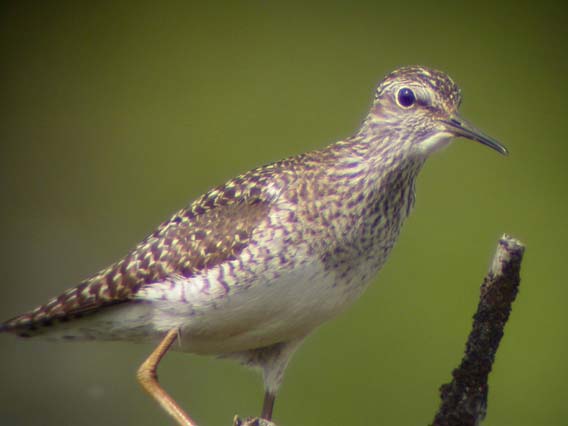
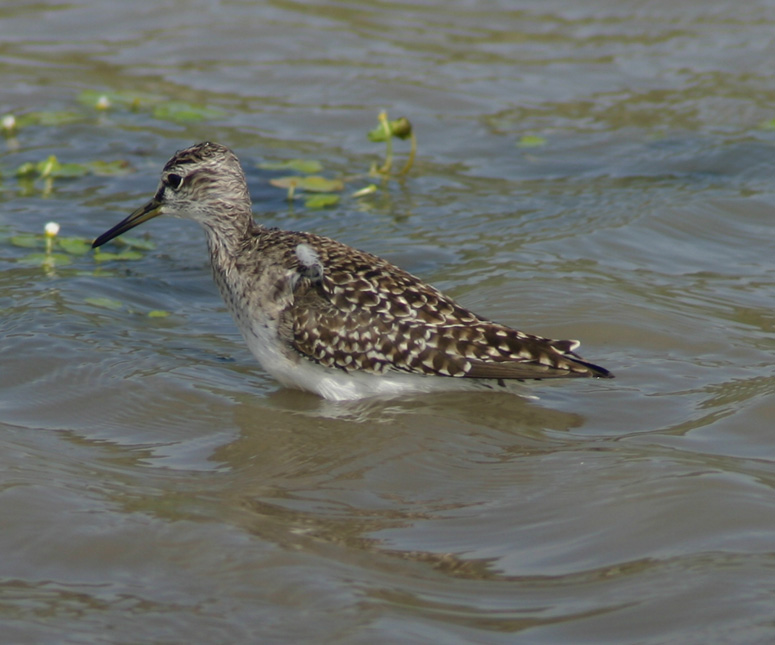
nature animals of wood sandpiper bird gallery


nature animals of wood sandpiper bird poster

nature animals of wood sandpiper bird poster


 free downloading pics of sandpiper wiki

free downloading pics of sandpiper wiki


 different varities of birds habitat
different varities of birds habitat

flying animals of wood sandpiper youtube

flying animals of wood sandpiper youtube


 wallpapers of wood sandpiper information
wallpapers of wood sandpiper information

The Wood Sandpiper is a small slim wader, dark grey-brown above, with light flecks or spots, and a white underbody. The light breast is mottled as well. The legs are yellow-green. There is a distinct white brow line. The flight is strong, with distinctive clipped wing beats. In flight, a square white rump is revealed and there are no wing bars.They are seen in small flocks or singly on inland shallow freshwater wetlands, often with other waders. They prefer ponds and pools with emergent reeds and grass, surrounded by tall plants or dead trees and fallen timber.They feed mainly on aquatic insects and their larvae and molluscs in moist or dry mud. They high-step daintily through shallow water, probing in mud or picking at the surface. They also swim well and may feed by sweeping their bill from side to side under water.
for more pics...