Showing posts with label Cranes. Show all posts

Saturday, 10 July 2010

famous cranes of australian white ibis wallpapers


famous cranes of australian white ibis wallpapers

famous cranes of australian white ibis wallpapers


Australian white ibis diet

Australian white ibis diet


free downloading pics of baby ibis wiki
free downloading pics of baby ibis wiki


 a group of Australian white ibis pictures
a group of Australian white ibis pictures

beautiful flying animal Australian white ibis

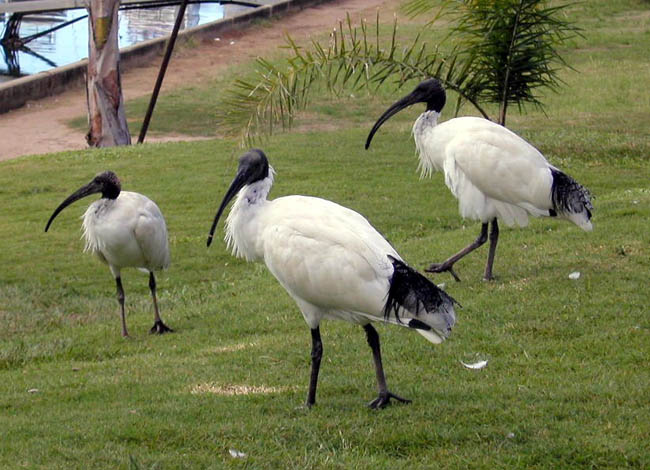
The Australian White Ibis is around 65–75 cm (25–30 in) long and has a bald black head and neck and a long black downcurved beak, measuring over 16.7 cm (6.6 in) in the male, and under in the female. There is some sexual dimorphism in size, as the slightly heavier male weighs 1.7–2.5 kg (3.7-5.5 lb) compared to the 1.4–1.9 kg (3.1–4.2 lb) female. The body plumage is white although it may become brown-stained. Inner secondary plumes are displayed as lacy black 'tail' feathers. The upper tail becomes yellow when the bird is breeding. The legs and feet are dark and red skin is visible on the underside of the wing. Immature birds have shorter bills.The head and neck are feathered in juveniles.This ibis feeds on various fish, frogs and other water creatures, and also insects and garbage.Breeding season varies with the location within Australia, generally August to November in the south, and February to May, after the Wet Season, in the north. The nest is a shallow dish-shaped platform of sticks, grasses or reeds, located in trees and generally near a body of water such as river, swamp or lake. Ibis commonly nest near other waterbirds such as egrets, herons, spoonbills or cormorants. Two to three dull white eggs are laid measuring 65 mm × 44 mm. The clutch is then incubated for 21–23 days. Hatchlings are altricial, that is, they are naked and helpless at birth, and take 48 days to fledge.for more pics...

american animals of white ibis cranes posters


american animals of  white ibis cranes posters
american animals of white ibis cranes posters

free downloading pics of white ibis wiki

nature animals of white ibis pictures

nature animals of white ibis pictures


flying birds of white ibis habitat

different types of ibis scientific name

different types of ibis scientific name


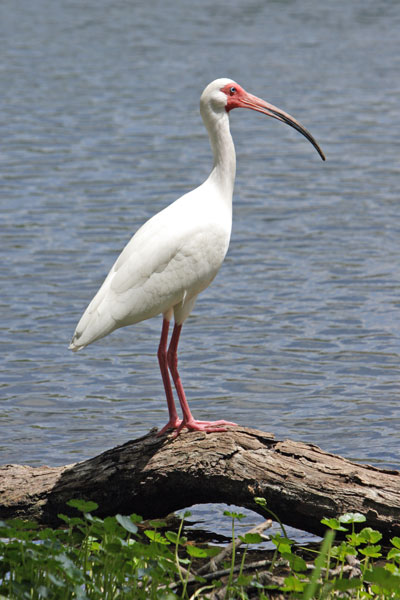
The american white ibis occurs in marshy wetlands and pools near the coast. It also occurs on mowed grass, lawns, and has become common in some city parks, where it can be found feeding alone or with other Ibis. It builds a stick nest in trees, bushes, or over water, and 2 to 5 eggs are typically laid. White ibises are monogamous and colonial, usually nesting in mixed colonies with other wading species.This ibis feeds by probing with its long, downcurved beak. Its diet consists of various fish, frogs and other water creatures, as well as insects and small reptiles.Adults are 65 cm long with a 95 cm wingspan. They have all-white plumage except for black wingtips (visible in flight) and reddish bills and legs. The red bill blends into the face of breeding birds; non-breeding birds show a pink to red face.

Wednesday, 7 July 2010

wallpapers of animal black winged stilt poster


wallpapers of animal  black winged stilt gallery

wallpapers of animal black winged stilt gallery


free downloading pics of black winged wiki

cute animals of baby black winged stilts images

different types of cranes youtube

different types of cranes youtube


nature animal black winged stilt flying

The black winged stilt is 33–36 cm long. They have long pink legs, a long thin black bill and are blackish above and white below, with a white head and neck with a varying amount of black. Males have a black back, often with greenish gloss. Females' backs have a brown hue, contrasting with the black remiges. In the populations that have the top of the head normally white at least in winter, females tend to have less black on head and neck all year round, while males often have much black, particularly in summer. This difference is not clear-cut, however, and males usually get all-white heads in winter.
Immature birds are grey instead of black and have a markedly sandy hue on the wings, with light feather fringes appearing as a whitish line in flight.These birds pick up their food from sand or water. They mainly eat insects and crustaceans.The nest site is a bare spot on the ground near water. These birds often nest in small groups, sometimes with Avocets.for different pics..